In July last year I did what I’ve been doing since I was old enough to vote, which is stand in a primary school sports hall and put my X next to the Labour candidate. I have never once found this a particularly emotional experience. I am not a man who cries at election results, in either direction. But I’ll admit that on the morning of the 5th of July 2024, watching the exit poll numbers come through and seeing the scale of the Conservative collapse, something shifted. Not quite hope – I’m thirty-seven and have spent enough years following British politics to have thoroughly managed my expectations – but something adjacent to hope. Relief, maybe. The sense that at least the direction of travel had changed, even if the destination remained unclear.
Nine months on, sitting here in April 2025, I’m trying to work out exactly how I feel about what’s happened since. The honest answer is: it’s complicated in the most boring possible way. Nothing has been a catastrophe. Nothing has been a revelation. We have been governed, steadily and competently and almost entirely without joy, by a man who appears to have made it his life’s mission to be the most aggressively reasonable person in any given room. Keir Starmer promised us change. What we got was administration. And in London, at street level, the dial has barely moved – except somewhere in the mood of the place, which feels, if anything, slightly flatter than it did under the people we just got rid of.
That probably requires some unpacking.
What We Were Actually Promised
To be fair to Starmer – and I’m going to try to be, even though fairness is increasingly effortful – the pitch was never revolutionary. It was never supposed to be. The entire electoral strategy was built around reassurance: we are serious people, we will not frighten the horses, we will fix the foundations. Five missions. A Plan for Change. Carefully calibrated speeches that contained passion in the same way a controlled explosion contains energy – technically present, but engineered not to cause structural damage.
Most Labour voters in London understood this going in. After fourteen years of Conservative government that had lurched between chronic incompetence and outright chaos, the ask felt almost touchingly simple: be boring, be stable, be functional. We would take boring. After Johnson and Truss and Sunak, boring sounded like a full night’s sleep after a long illness.
The problem, which has become apparent over these nine months, is that boring is only truly tolerable when things are visibly improving underneath the boringness. Boring as a political style is manageable. Boring as a political outcome is something else entirely.
The First Moves, and What They Said About the Rest
The things a government chooses to do first tell you something. Not everything – policy is complicated, inheritance takes time to untangle, Rome wasn’t built in an afternoon. But first moves carry a signal about what’s actually being prioritised versus what was said during the campaign.
The winter fuel payment cut landed hardest for a lot of people I know. Strip it from ten million pensioners, limit it to those on pension credit, save a few billion. Economically defensible, probably, given what Rachel Reeves found in the Treasury in-tray. As a statement of political intent from a party that had spent years positioning itself as the champion of ordinary people – it was a gift to every critic they had, and they handed it over in the opening weeks. My mum rang me about it. My mum does not ordinarily ring me about politics.
Then there were the gifts. The glasses, the clothing, the hospitality, the slow and grinding revelation that the man who had built his entire political identity around the concept of integrity had been accepting fairly substantial personal benefits while telling everyone else about the necessity of difficult choices. None of it was illegal. All of it was precisely the kind of thing that, in opposition, Labour had been absolutely scathing about when the other lot were doing it. The smell of it stuck. It stuck because it confirmed something people had been trying not to think.
And then there’s the employer National Insurance rise – something that hits freelancers and small businesses at a tilt, through the costs passed down the chain. I work for myself. Several people I commission work from are small operations. You feel these things in ways that don’t show up cleanly in economic data but absolutely show up in invoices.
London, Nine Months On
Here’s what I can report from Hackney, April 2025: nothing feels materially different.
The rent is still extraordinary. The weekly shop is still a minor act of financial commitment. The Overground breaks down with a regularity that suggests TfL has discovered a way to turn signal failures into a subscription service. The roads around Bethnal Green that needed resurfacing are still waiting. The planning reform conversations that were supposed to unlock London’s housing crisis – the ones that would make the city buildable again, that would actually shift the dial on supply – are still conversations. Still navigating objections. Still somewhere in the long corridor between a white paper and an actual crane visible from my kitchen window.
To be fair – there it is again – some of this is simply the pace of government. You cannot reverse fifteen years of chronic underinvestment in nine months. Infrastructure is slow. Policy takes time to become reality. I know this, and I try to hold it honestly. But knowing it intellectually and feeling it on the ground are different things. On the ground it just feels like more of the same, with slightly less theatrical incompetence attached.
The thing about London is that it usually runs on a kind of ambient forward motion – the sense that the city is always in the process of becoming something, that the energy is moving even when individual things are broken or expensive or infuriating. That feeling has gone a bit flat lately. I can’t lay that entirely at Starmer’s door – a city’s mood is bigger than any one government. But he hasn’t done anything to reinflate it either.
The Joylessness Problem
This is the “somehow worse” part of the headline, and it’s harder to quantify than a policy position but I think it’s real and worth taking seriously.
The Conservative years were genuinely dreadful in a number of measurable ways, but they were at least dreadful in ways that generated a certain energy. There was something to push against – something that made people argue in pubs, organise on doorsteps, make extremely good jokes on the internet. Political awfulness, perversely, can be galvanising. You know where you stand. Your frustration has a clear object.
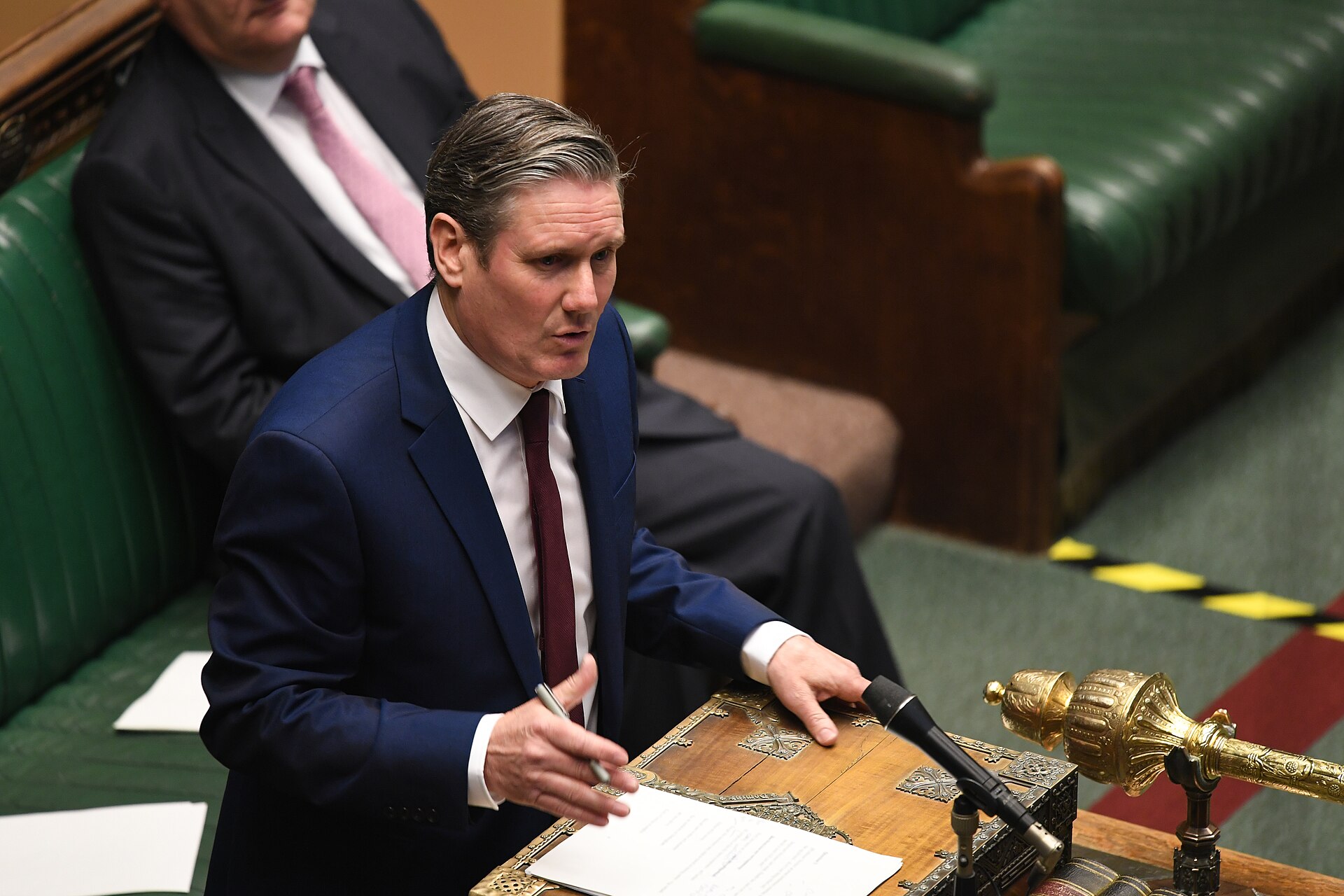
What we have now is a government that is neither inspiring enough to energise its supporters nor bad enough to energise its critics. It occupies a grey zone of managerial adequacy that drains the room without doing anything obviously terrible. Starmer at the despatch box is a man performing the concept of a Prime Minister – technically correct in every gesture, forensically prepared, and somehow leaving you less convinced each time the session ends. There’s a flatness to it that I find difficult to articulate but impossible to ignore.
In London, where the political temperature tends to run a degree or two warmer than the national average, this particular kind of deflation is especially noticeable. People aren’t angry. They’re not energised in opposition. They’re just – flat. There’s an important difference between anger and flatness, and the flat version is considerably harder to shift.
Where This Leaves Me, Honestly
I’ll keep voting Labour. I want to be straightforward about that because there’s a version of this piece that builds toward some dramatic declaration of political disillusionment and that’s genuinely not where I am. The alternatives are not improvements. I am old enough not to confuse disappointment with the collapse of everything, and cynical enough about the alternatives to keep some perspective.
But I voted for something that felt, for one morning, like a genuine shift in direction. What I’ve got instead is the competent management of a difficult situation, delivered without warmth, without imagination, and without any apparent sense that the people at the sharper end of London’s cost of living – the ones on streets like mine, the ones my mum worries about – deserve something more than being told, repeatedly, that the foundations are being fixed and the pain is necessary and things will improve in time.
Maybe they will. Maybe in two years I’ll read this back and feel embarrassed about my impatience. I’m leaving that door open, because I’ve been wrong before and I’ll be wrong again.
Nine months in, though, I’ll tell you what change feels like from where I’m standing on Rutland Road.
It feels like nothing. Just quieter nothing than before.