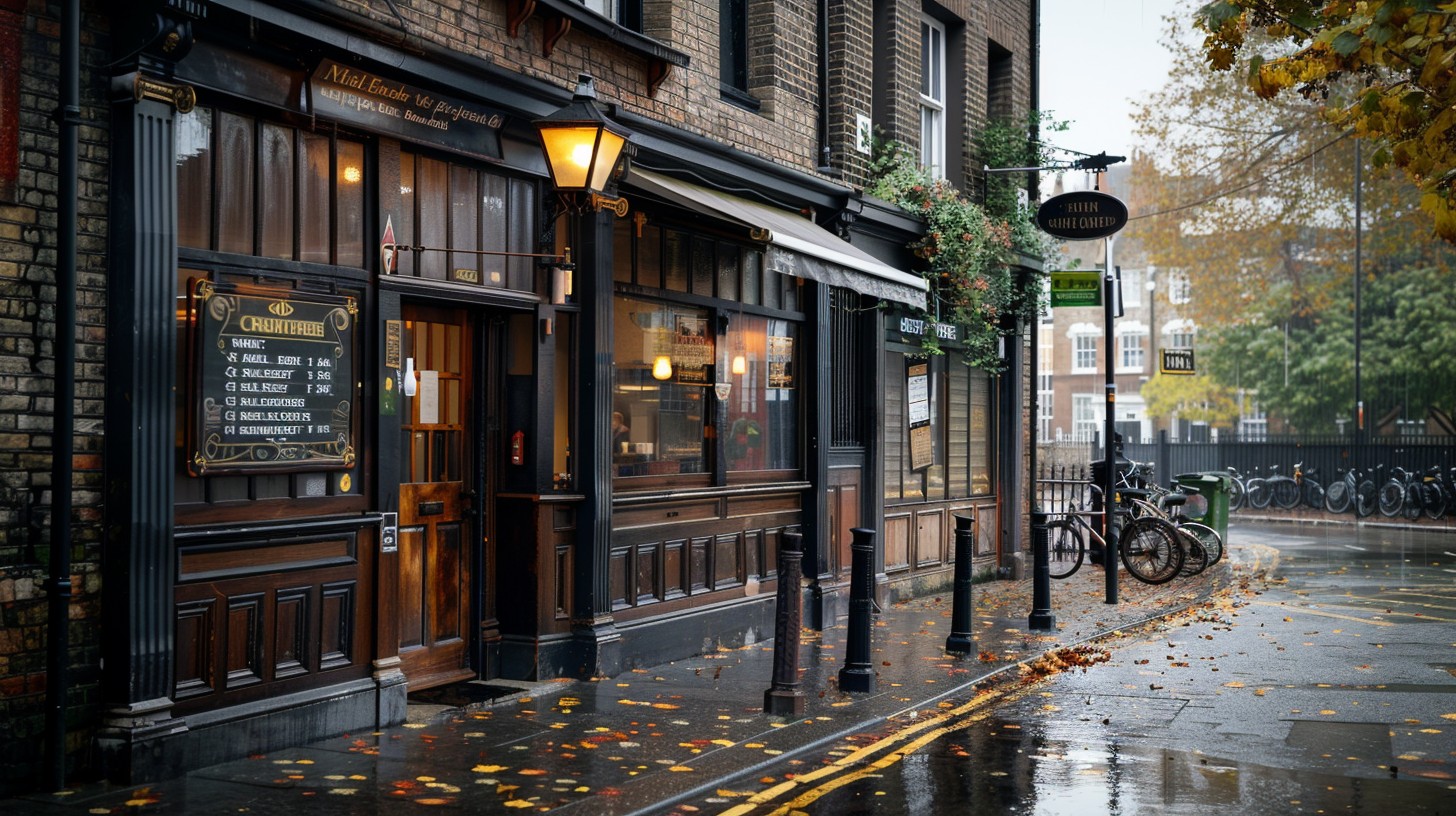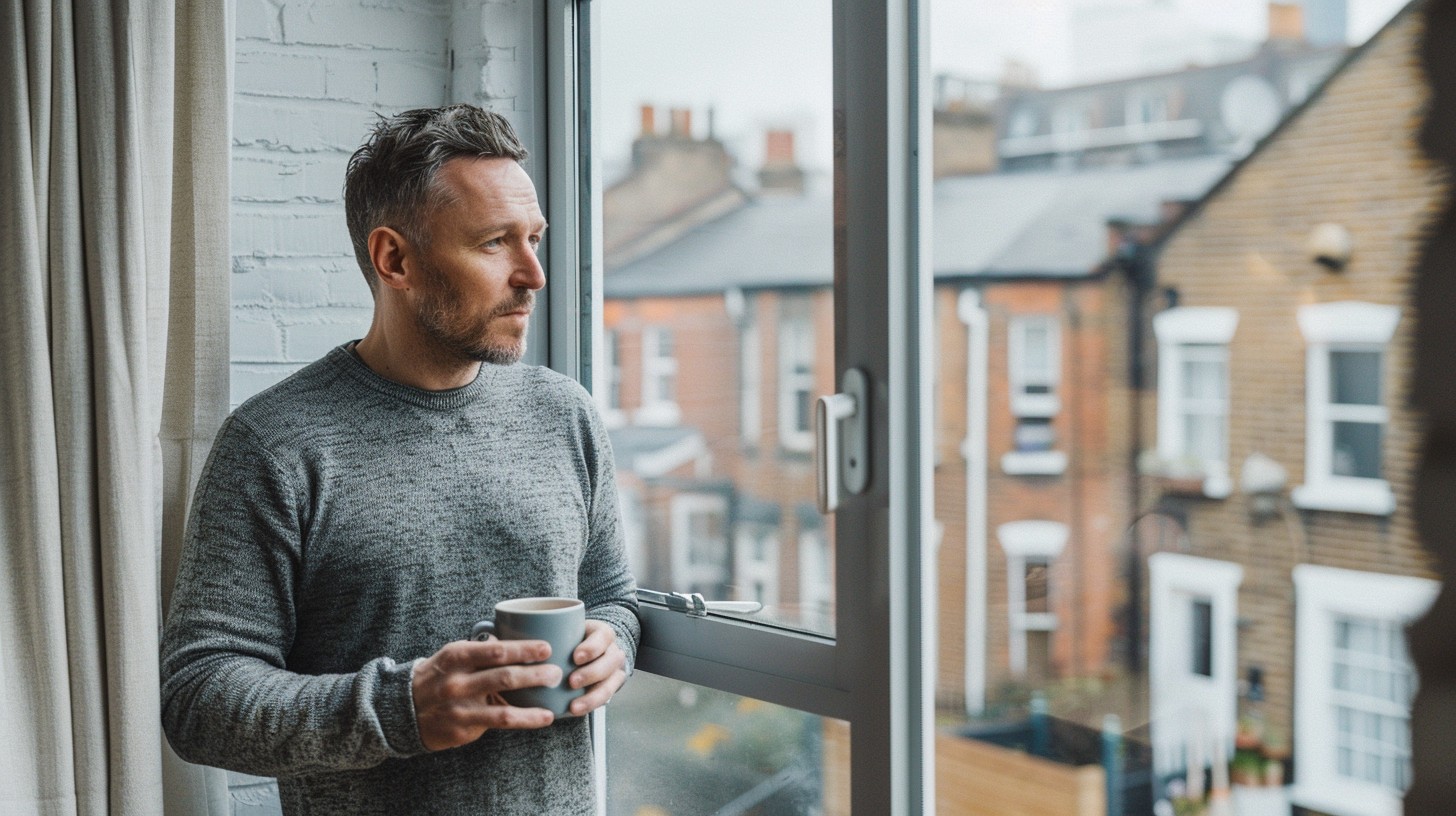
There’s a thing that happens when you’ve lived somewhere long enough. You stop actually seeing it. The street becomes wallpaper – something your eyes move across every morning without registering. The kerb, the bins, the familiar sequence of front doors. Then one day, for no particular reason, you look up. You clock the new café where the off-licence used to be. You notice that the slightly grim chicken shop on the corner has been replaced by something selling oat milk flat whites at four quid a go. You register that the four lads who used to pile out of number thirty-two at midnight on Fridays have been quietly replaced by a couple who compost their food waste and seem to be in bed by ten. And you think: right. So this is what eight years looks like.
I moved to Rutland Road at the beginning of 2017. I was thirty, freshly freelance, operating on the kind of optimism that’s really just financial anxiety wearing a brave face and hoping nobody notices. The flat wasn’t much – still isn’t, if I’m being honest with myself – but it had good light in the mornings and a twenty-minute walk to Victoria Park, which at the time felt like more than enough. Hackney was already expensive by then. It had already been discovered, photographed, written up in weekend supplements by journalists who’d moved there for the story and stayed for the brunch options. But there was still a texture to it, a roughness at the edges, that made it feel like a place where actual people lived rather than a backdrop for someone’s lifestyle content.
Eight years on, I’m still here. The street and I have renegotiated our terms several times. This is my attempt to account for what that’s actually looked like.
What Rutland Road Was, and What It Told Me
When I arrived, the street had a character I’d describe as cheerfully unresolved. Long-standing families lived next door to young renters like me, next door to a few properties that had clearly been through the buy-to-let machine and come out the other side a little blank-faced. The corner shop was run by a man named Dennis who knew everyone’s name and absolutely nobody’s business, which is the ideal combination in a neighbourhood shopkeeper. There was noise – kids out late in summer, music drifting from open windows, the occasional door-slamming domestic – but it was the noise of a street that was genuinely inhabited. Lived in rather than staged.
What I liked most was that nobody seemed particularly interested in what you were doing with your life. That sounds like a small thing but it isn’t. In the places I’d rented before – a house share in Finsbury Park, a dispiriting studio in Stoke Newington that smelled faintly of damp and previous occupants’ poor decisions – there was always a low-level social performance required. People wanting to know your job, your five-year plan, whether you were thinking of buying anytime soon. Rutland Road asked nothing of me. I was just a bloke who lived there. That suited me down to the ground.
The Creep – How Gentrification Actually Arrives
People talk about gentrification as though it arrives all at once, like a planning application you can object to at the town hall. It doesn’t. It creeps. It comes in increments so small that you barely notice any individual one, and then you step back and the whole picture has shifted without you ever quite approving it.
The first sign on our street was the wheelie bins. Suddenly several of them had stencilled house numbers on the side, which sounds utterly inconsequential but tells you everything – it’s the mark of someone who’s moved somewhere and immediately started thinking about property values and kerb appeal. Then came the front garden makeovers – poured resin, reclaimed brick, a suspicious quantity of olive trees in terracotta pots. Then the ring doorbells. Then the first dinner party I was inadvertently aware of because the windows were open and someone was explaining to someone else, at considerable length, what a natural wine actually was and why it mattered.
None of this is a tragedy. I want to be clear about that. I’m not standing in my doorway shaking a fist at prosperity. Some of the changes have been genuinely good – the street is cleaner, there’s less aggravation late at night, and the café that replaced Dennis’s corner shop after he retired and his son decided not to take it on does a very decent bacon roll. I am not immune to a decent bacon roll. But there is something quietly melancholy about watching a place sand down its own edges. Hackney’s edges were what made it interesting. The sense that genuinely different kinds of lives were being lived in close proximity – that was the texture. What replaces it is perfectly fine. It’s just smoother. And smoother is not always the same thing as better.
Eight Years of Me
Here’s the thing I didn’t anticipate: watching the street change has made me take stock of how much I’ve changed alongside it, and the two feel strangely connected.
In 2017 I was freelancing on hope, strong coffee, and not very much else. Chasing commissions, writing things I wasn’t entirely proud of for outlets that at least paid promptly, turning down the things I actually wanted to write for the things that covered the rent. It was exciting in the way that mild financial precarity is exciting when you’re thirty – which is to say, it felt like freedom even when it wasn’t anything of the sort.
I’m thirty-seven now. Still freelance, but the ground beneath it is considerably steadier. I’ve got regular outlets I actually respect writing for, a roster of editors who know what I’m good at, and enough experience by now to recognise when a commission isn’t worth the headache regardless of the fee attached to it. The anxiety hasn’t disappeared – I don’t think it ever does when you work for yourself – but it’s quieter. It sits in a corner of the room rather than running it.
My relationship is seven years in, no ring, no particular plans for a ring, and I’d be lying if I said I fully understood why this still requires explanation at certain family gatherings. We’re good. The flat is slightly too small for two people and we’ve made it work, and on most days I can’t imagine being anywhere else. That, I think, is probably the whole point.
The Neighbours You Keep, and the Ones You Lose
What I find myself thinking about most, when I actually sit down and think about Rutland Road across these eight years, is the people I knew briefly and then didn’t.
The Polish family at number eighteen who were here for three years and always had something on the go in their front garden – courgettes one summer, sunflowers the next, some optimistic attempt at tomatoes the summer after that. The older Jamaican woman two doors down who used to sit out on a fold-up chair whenever it was warm enough and had a fully formed, loudly held opinion on absolutely everything – the council, the buses, what was happening to the market, your haircut. She moved to her daughter’s place in Tottenham sometime in 2021 and the street got noticeably quieter for it, and not in a good way. I genuinely miss her.
Then there’s the bloke across the road whose name I never actually learned. I had been nodding to him for six years – a nod, sometimes half a word about the bins or the weather or the state of the road. He moved out last October. I noticed the gap the way you notice a tooth that’s gone – not exactly painful, just a strange new absence where something familiar used to be.
This is one of the quieter costs of renting. Nobody on a street like this is quite as rooted as they might appear. We’re all in some form of negotiation – with landlords, with the market, with the slow arithmetic of London rents that grinds away whether you’re paying attention to it or not. It keeps everything provisional in a way that owning doesn’t. I feel that. I’ve always felt it. It’s not a grievance, just a condition you learn to carry.
So. Eight Years On a Street That Won’t Keep Still
The street has changed. I’ve changed. There’s something almost tidy about the fact that we’ve done it roughly in step with each other – neither of us quite what the other expected, and here we both are anyway, getting on with it.
I don’t know how many more years Rutland Road and I have got together. Rents go up, landlords sell, life has a habit of moving you along whether you planned to go or not. But right now, on a decent morning with the light coming through the front window and the faint noise of Victoria Park carried in on the air if you open it wide enough, this still feels like mine. Not in any legal sense. Not in any equity-building, ladder-climbing, this-is-my-forever-home sense.
Just mine, the way somewhere becomes yours when you’ve lived in it long enough to remember what it used to be – and decided, without much fanfare, to stay anyway.
That’ll do for now.